Showing posts with label School Of Education. Show all posts

Saturday, March 28, 2015

Teacher Effectiveness Training (TET)

By Thomas Gordon
3 main keys:
1) Active Listening
2) I-Message
3) Gear Shifting

6 steps:
1) Determine if the problem exist
2) Own the problem
3) Listen actively
4) Gear shifting
5) Method III
6) Modifying the enviroment

The system TET only applies when
- Students feel accepted in class
- Students are mentally healthy
- Students can take responsibility
- Teacher cares about the relationship and values it..

Teacher Effectiveness Training
Based on philosophy that mean children are inherently rational and if directed and forced by teachers will be stifled...
Assumptions: students are motivated to be good, should be supported by accepted relationship and is capable of solving their own problems..

Saturday, March 21, 2015

Bloom's Taxonomy Of Educational Objectives Table Discussion


LEVEL OF EXPERTISEDESCRIPTION OF LEVELEXAMPLE OF MEASURABLE
STUDENT OUTCOME
Bloom's Taxonomy of Educational Objectives for Knowledge-Based Goals
1. Knowledge   Recall, or recognition of terms, ideas, procedure, theories, etc.When is the first day of Spring?
2. Comprehension   Translate, interpret, but not see full implications or transfer to other situations, closer to literal translation.What does the summer solstice represent?
3. Application   Apply abstractions, general principles, or methods to specific concrete situations.What would Earth's seasons be like if its orbit was perfectly circular?
4. Analysis   Separation of a complex idea into its parts and an understanding of organization and relationship between the parts. Includes realizing the distinction between hypothesis and fact as well as between relevant and variables.Why are seasons reversed in the southern hemisphere?
5. Synthesis   Creative, mental construction of ideas and concepts from multiple sources to form complex ideas into a new, integrated, and meaningful pattern subject to given constraints.If the longest day of the year is in June, why is the northern hemisphere hottest in August?
6. Evaluation   To make a judgment of ideas or methods using external evidence or self-selected criteria substantiated by observations or informed rationalizations.What would be the important variables for predicting seasons on a newly discovered planet?

20 Benefits of Collaborative Learning

  1. Develops higher level thinking skills.
  2. Builds self esteem in students.
  3. Promotes a positive attitude toward the subject matter.
  4. Develops oral communication skills.
  5. Develops social interaction skills.
  6. Creates an environment of active, involved.
  7. Encourages diversity understanding.
  8. Encourages student responsibility for learning.
  9. Enhances self management skills.
  10. Fosters and develops interpersonal relationships.
  11. Encourages alternate student assessment techniques.
  12. Classroom anxiety is significantly reduced.
  13. Sets high expectations for students. 
  14. Atmosphere of cooperation and helping. 
  15. Creates a stronger social support system.
  16. Builds positive heterogeneous relationships.
  17. Stimulates critical thinking.
  18. Students explore alternate problem solutions in a safe environment.
  19. Increases student retention.
  20. Promotes positive race relations.

Sunday, March 15, 2015

Debates in the Middle School Classroom

A plan for staging a debate, including choosing a Topic, "Debate do's," and Assessment.

WHY DO WE HAVE DRESS CODES? Why is homework necessary? Why do we have assigned seats? Why can’t we talk? Why can’t we tattoo our bodies using board markers? Why can’t we use lotion in class? Why do have to be quiet during announcements?
Why? Why? Why? Students are naturally inquisitive and sometimes quite spirited “know-it-all.” Why not capitalize on this somewhat annoying behavior? As teachers we need to work smarter, not harder. Using students’ natural talent of arguing and challenging authority, we can channel student energy into a positive learning assignment. Debates offer that natural avenue for teachers to facilitate the analytic  thinking.
Classroom debates enable students to work cooperatively, brainstorm ideas, develop vocabulary and read to support an opinion. By conducting research, students are taking notes to summarize, to question, and to clarify information. Students are identifying the main idea, deleting less important information, collapsing, categorizing, and labeling information. Questioning allows students to explain and to explore additional facts for clarification purposes. These comprehension skills are essential for students to become competent readers and writers linking debates directly to the entire curriculum.
Debates allow students to become more proficient in speaking, researching, reading, and writing skills, and they promote reasoning as well as communication skills. Fact-filled and passionate debates provide the incentive for students of all academic and socioeconomic levels to become engaged and to participate in the debate process. In addition, debates, both formal and informal, are a vehicle for students to express their opinions assertively in a respectful manner on a relevant issue or topic.

Before the debate

A debate is a discussion in which participants articulate, justify, and clarify their positions on an issue. In this informal debate plan, rebuttals attempt to refute statements made by the opposing side.

SELECT THE TOPIC

The topic for a debate evolves from what you are teaching. For example, as students study World War II, students could debate the bombing of Hiroshima and Nagasaki. Other debates topics may include: Should recycling be required? Should all the countries of Europe be required to join the European Union? Should North Carolina begin a lottery?

TAKE A STAND

Who’s pro and who’s con? Every debate has two sides, the affirmative side and the negative side. The affirmative side, “pro”, supports a proposition. The opposing or negative side, “con”, opposes the proposition. The teacher can divide the class into pros and cons, or students may choose their own stance.

LET THE RESEARCH BEGIN

Allow one to three class periods for research. Fact gathering should support the student’s point of view. Three to five resources are recommended. Students need a structured framework to guide their research. A template for taking notes is shown below. We strongly suggest students understand the model before the media visit. It will make your media visit much more pleasant!
Opinion: I believe the United States should have bombed Hiroshima.
Source #1:
Facts:
Source #2:
Facts:
Source #3:
Facts:

The debate

SELECT A MODERATOR

The moderator directs the debate and may be the teacher or a student. A student moderator should be able to speak clearly and keep everyone on task in a respectful manner. The moderator formally introduces the debate topic and recognizes students to speak alternating between pro and con.

ENSURING EQUITABLE PARTICIPATION

Distribute 4″ x 6″index cards. On the front side, students will write their names and either PRO or CON in large, bold letters. Raising the card will indicate the student’s request to speak. Students will track their participation by making a fold in the card every time they speak. To ensure equitable participation, after three folds, students should not speak until all students have had an opportunity to voice their opinion. (The back of the index card will be used in a post-debate activity).

OPENING AND CLOSING STATEMENTS

Students may volunteer to make opening and closing statements, or the teacher may appoint students. Setting the tone for the debate, the students should have a prepared speech (one to three minutes). The debate begins with an opening statement from the pro side, followed by a statement from the con side. Opening statements should include each side’s opinion with a brief overview of the supporting evidence.
The debate ends with closing statements from both sides. Again the pro side speaks first followed by the con side. The planned closing statements (one to three minutes) should restate the opinions with strong supporting evidence.

DEBATE DO’S

Students need expectations spelled out. It may be a good idea to develop a list of Debate Do’s together as a class. The following items should be on the list. We suggest that these Debate Do’s be posted in the classroom and referenced often:
  • Be polite and courteous.
  • Listen attentively
  • Be respectful and supportive of peers.
  • Avoid inappropriate noises.
  • Speak only when recognized by the moderator.
  • Allow others to express their opinions; do not monopolize the debate.
  • Use grammatically correct language.
  • Speak clearly, slowly, and loud enough to be heard by the audience.
  • Speak with passion and excitement.

After the debate

The debate is over, and it’s time to review and evaluate.

REFLECTIONS

The index card used to designate pro or con will now be used for debate reflections. Using the back of the card, students will express their reactions to the debate in a media of their choice. Suggestions include summarizing the debate in a paragraph or a poem, designing a cartoon, billboard, or a bumper sticker, or creating a graphic that represents their opinion.

RUBRIC

This rubric, designed for student success, guides teachers and students in the evaluation process. Extra credit can be awarded to the opening and closing speakers and to students who use more resources. We like to staple the rubric to the completed assignments. There again, work smarter and not harder.
Requirement
Number of Points
Points Earned
Research Guide
  • Facts listed
  • 3-5 sources documented
30
Index Cards
  • Name and position on front
  • Reflection on back
30
Debate Do’s
  • Teacher observation
30
All work is neat, legible, and turned in on time.
10
Extra Credit
Grade

Saturday, March 14, 2015

Language Proficiency


What is Fluency?

There does not seem to be a universally agreed-upon definition of fluency in the general public. I have heard it described as anything from being able to order food to the language ability of a native speaker. The followingis my version of the closest thing there is to an official definition: what linguists and teachers tend to agree are the basic levels of language aptitude.
Novice(Beginning)
A novice has extremely limited vocabulary and grammar, understands very little of the language when spoken normally, has difficulty making self understood by native speakers, and thus has serious problems in an immersion situation. A novice may be able to order food in a restaurant, buy a train ticket, and find lodging for the night, but only with great difficulty.
Survivor(Intermediate)
A survivor converses using basic vocabulary (time, date, weather, family, clothes); uses the present, past, and future tenses more or less correctly; and is aware of difficult grammar topics but either uses them incorrectly or awkwardly rearranges sentences in order to avoid them. Still needs to tote a dictionary and/or phrase book around, but can survive in an immersion situation: order food, give and receive directions, take a taxi, etc.
Conversationalist(Advanced)
A conversationalist has the ability to converse about fairly abstract ideas, state opinions, read newspapers, understand the language when spoken normally (on TV, radio, film, etc.) with slight-to-moderate difficulty. Still has some trouble with specialized vocabulary and complicated grammar, but can reorganize sentences in order to communicate and figure out the majority of new vocabulary within the context.
Debater(Fluent)
A fluent speaker can participate in extended conversations, understand the language when spoken normally (on TV, radio, film, etc.), figure out meaning of words within context, debate, and use/understand complicated grammatical structures with little or no difficulty. Has good accent and understands dialects with slight-to-moderate difficulty.
Native speaker(Mother tongue)
Someone who has spoken the language from at least the age of 5 (this age limit is subject to some debate: I've heard theories that a native speaker can have started learning the language as late as any time up to puberty). In theory, understands essentially everything in the language: all vocabulary, complicated grammatical structures, cultural references, and dialects. Has a native (i.e., invisible, "normal" in his/her region) accent.


The 4 Language Skills

            Becoming Proficient

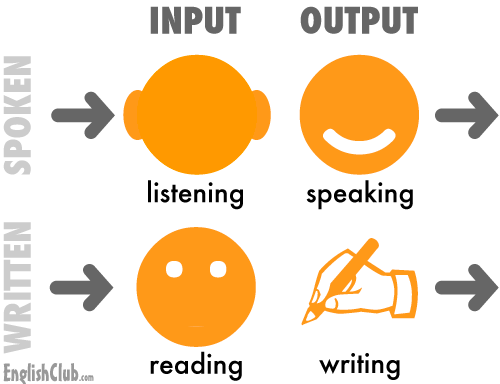
When we learn a language, there are four skills that we need for complete communication. When we learn our native language, we usually learn to listen first, then to speak, then to read, and finally to write. These are called the four "language skills":
The 4 language skills
The four language skills are related to each other in two ways:
  • the direction of communication (in or out)
  • the method of communication (spoken or written)
  • Input is sometimes called "reception" and output is sometimes called "production". Spoken is also known as "oral".
Note that these four language skills are sometimes called the "macro-skills". This is in contrast to the "micro-skills", which are things like grammar, vocabulary, pronunciation and spelling.

Teaching Students with Special Needs


Learning disabled students are those who demonstrate a significant discrepancy, which is not the result of some other handicap, between academic achievement and intellectual abilities in one or more of the areas of oral expression, listening comprehension, written expression, basic reading skills, reading comprehension, mathematical calculation, mathematics reasoning, or spelling.Students with Learning Disabilities
Following is a list of some of the common indicators of learning disabled students. These traits are usually not isolated ones; rather, they appear in varying degrees and amounts in most learning disabled students. A learning disabled ss :

-Has poor auditory memory—both short term and long term.

-Has a low tolerance level and a high frustration level.

-Has a weak or poor self-esteem.

-Is easily distractible.

-Finds it difficult, if not impossible, to stay on task for extended periods of time.

-Is spontaneous in expression; often cannot control emotions.

-Is easily confused.

-Is verbally demanding.

-Has some difficulty in working with others in small or large group settings.

-Has difficulty in following complicated directions or remembering directions for extended periods of time.

-Has coordination problems with both large and small muscle groups.

-Has inflexibility of thought; is difficult to persuade otherwise.

-Has poor handwriting skills.

-Has a poor concept of time.

Teaching learning disabled youngsters will present you with some unique and distinctive challenges. Not only will these students demand more of your time and patience; so, too, will they require specialized instructional strategies in a structured environment that supports and enhances their learning potential. It is important to remember that learning disabled students are not students who are incapacitated or unable to learn; rather, they need differentiated instruction tailored to their distinctive learning abilities. Use these appropriate strategies with learning disabled students:

Provide oral instruction for students with reading disabilities. Present tests and reading materials in an oral format so the assessment is not unduly influenced by lack of reading ability.

Provide learning disabled students with frequent progress checks. Let them know how well they are progressing toward an individual or class goal.

Give immediate feedback to learning disabled students. They need to see quickly the relationship between what was taught and what was learned.

Make activities concise and short, whenever possible. Long, drawn-out projects are particularly frustrating for a learning disabled child.

Learning disabled youngsters have difficulty learning abstract terms and concepts. Whenever possible, provide them with concrete objects and events—items they can touch, hear, smell, etc...

Learning disabled students need and should get lots of specific praise. Instead of just saying, “You did well,” or “I like your work,” be sure you provide specific praising comments that link the activity directly with the recognition; for example, “I was particularly pleased by the way in which you organized the rock collection for Hiba and Ola.”

When necessary, plan to repeat instructions or offer information in both written and verbal formats. Again, it is vitally necessary that learning disabled children utilize as many of their sensory modals as possible.

Encourage cooperative learning activities when possible. Invite students of varying abilities to work together on a specific project or toward a common goal. Create an atmosphere in which a true “community of learners” is facilitated and enhanced.

| Don't Forget To Leave Your Comments |


Monday, March 9, 2015

Bloom's Taxonomy

The Three Domains of Learning

Scholars identified three domains of educational activities or learning:

Cognitive: mental skills (knowledge)
Affective: growth in feelings or emotional areas (attitude or self)
Psychomotor: manual or physical skills (skills)
Since the work was produced by higher education, the words tend to be a little bigger than we normally use. Domains may be thought of as categories. Instructional designers, trainers, and educators often refer to these three categories as" KSA " (Knowledge [cognitive], Skills [psychomotor], and Attitude [affective]). This taxonomy of learning behaviors may be thought of as “the goals of the learning process.” That is, after a learning episode, the learner should have acquired a new skill, knowledge, and/or attitude.
While the committee produced an elaborate compilation for the cognitive and affective domains, they omitted the psychomotor domain. Their explanation for this oversight was that they have little experience in teaching manual skills within the college level. However, there have been at least Three Psychomotor Models created by other researchers.
Their compilation divides the three domains into subdivisions, starting from the simplest cognitive process or behavior to the most complex.  Bloom's taxonomy is easily understood and is probably the most widely applied one in use today..
Dont forget to leave your comments :))


Understanding by Design

Understanding by Design (Ubd) is a framework for improving student achievement. Emphasizing the teacher's critical role as a designer of student learning, Ubd works within the standards-driven curriculum to help teachers clarify learning goals, devise revealing assessments of student understanding, and craft effective and engaging learning activities.
Understanding by Design is based on the following key ideas:
  • A primary goal of education should be the development and deepening of student understanding.
  • Students reveal their understanding most effectively when they are provided with complex, authentic opportunities to explain, interpret, apply, shift perspective, empathize, and self-assess. When applied to complex tasks, these "six facets" provide a conceptual lens through which teachers can better assess student understanding.
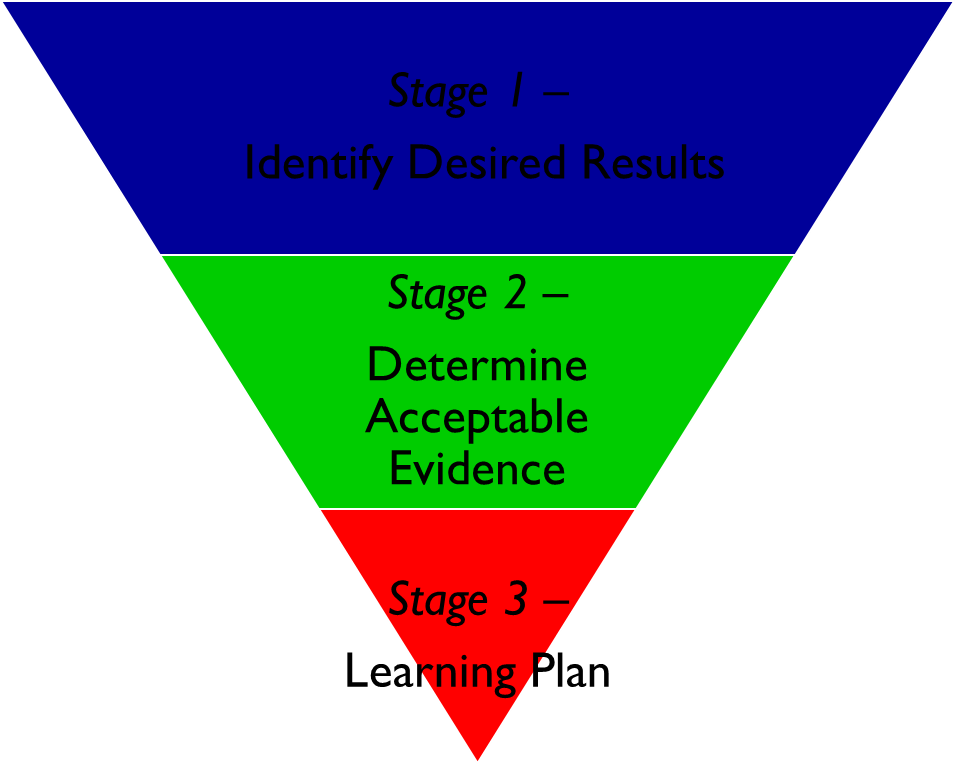
  • Effective curriculum development reflects a three-stage design process called "backward design" that delays the planning of classroom activities until goals have been clarified and assessments designed. This process helps to avoid the twin problems of "textbook coverage" and "activity-oriented" teaching, in which no clear priorities and purposes are apparent.
  • Student and school performance gains are achieved through regular reviews of results (achievement data and student work) followed by targeted adjustments to curriculum and instruction. Teachers become most effective when they seek feedback from students and their peers and use that feedback to adjust approaches to design and teaching.
  • Teachers, schools, and districts benefit by "working smarter" through the collaborative design, sharing, and peer review of units of study.
In practice, Understanding by Design offers:
  • a three-stage "backward planning" curriculum design process anchored by a unit design template
  • a set of design standards with attendant rubrics
  • and a comprehensive training package to help teachers design, edit, critique, peer- review, share, and improve their lessons and assessments.
Dont forget to leave your comments :)